Review
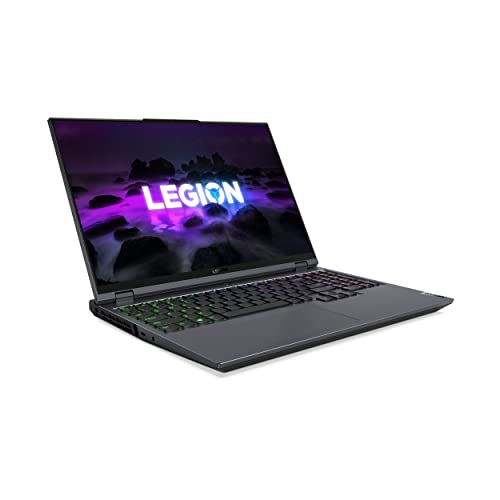
Lenovo Legion 5 Pro 16ARH7H RTX 3070 Ti review
Frame rates
1920×1080, High preset, upscaling off.
Measured on this machine. Source: Notebookcheck, 2022-10-29.
Not scored: incomplete benchmark suite
Every scored laptop on this site is averaged over the same 5 games, and this one is short of Cyberpunk 2077, Baldur's Gate 3. A mean over 5 games is not comparable to a mean over 5, so we publish the figures we have and leave the score blank rather than rank it against machines tested on a different set. The numbers below are real - the suite is just incomplete.
How these numbers were produced
Frame rates here are not measured by us, and we label how each one was arrived at. A figure marked measured comes from a published run on that exact machine. A figure marked representative is derived from the GPU and its power limit (TGP) and cross-referenced against published reviews - a sound estimate of what that configuration delivers, but not a measurement of that specific laptop. Unless stated otherwise, numbers are 1920x1080, High preset, upscaling off. Where a laptop ships in several power configurations we use the wattage of the exact SKU listed, because a 140W RTX 5070 and a 115W one are not the same product.
In use
The short version
The Lenovo Legion 5 Pro 16ARH7H is a powerful RTX 3070 Ti gaming laptop with a sensible amount of memory, a large high-resolution IPS screen and a GPU configured with a 140W power limit. Its measured gaming results are strong, particularly in games that can make effective use of the RTX 3070 Ti, and it is clearly a much more capable gaming machine than lower-tier RTX 3050 Ti laptops. The problem is not that it lacks performance. The problem is that, at a UK price of £1,705, the performance needs to be weighed against the fact that this is still a previous-generation RTX 3070 Ti machine, and that its 2560x1600 display asks considerably more of the GPU than the published 1920x1080 benchmark figures.
Notebookcheck’s measured figures put the Legion 5 Pro at a mean of 150fps across the five-game scoring suite at 1920x1080, High settings and with upscaling disabled. That is a strong headline result. It reaches 248fps in Strange Brigade, 168fps in GTA V and 132fps in Dota 2. Those are the games in which the laptop can make meaningful use of its 165Hz panel at the benchmark settings, particularly if the player is content to game below the screen’s native 2560x1600 resolution.
The more demanding results are still good, but they explain why the 165Hz screen should not be read as a promise of 165fps in every modern game. Final Fantasy XV is measured at 116fps, Cyberpunk 2077 1.6 at 102fps and X-Plane 11 at 84fps. Those figures are perfectly playable at 1920x1080 High, but they are below the panel’s maximum refresh rate. More importantly, they are not native-resolution results. There is no measured frame-rate data here for 2560x1600 gaming, so it would be wrong to pretend that the Legion 5 Pro can deliver the same numbers on its own panel at its native resolution.
This is therefore a laptop for someone who values a good 16in 2560x1600 display, wants a substantial RTX 3070 Ti configuration rather than a low-power implementation, and is comfortable balancing resolution, settings and frame rate on a game-by-game basis. It is a less convincing choice for a buyer who wants uncomplicated high-refresh native-resolution gaming in demanding new titles, or who is paying £1,705 primarily for the RTX 3070 Ti badge rather than for the overall combination of screen, memory and performance.
The 32GB memory allocation is a practical positive. The fact sheet does not provide memory speed, storage capacity, port selection, dimensions, chassis materials, keyboard details, cooling noise or temperatures, so those are not areas in which this review can make claims. What the available data does show is a capable, relatively heavy 16in gaming laptop whose measured performance remains strong, but whose value proposition is under pressure at the stated UK price.
Performance
A 140W RTX 3070 Ti with results to match
The most important performance specification is not simply that this laptop uses an RTX 3070 Ti. It is that Lenovo configures the GPU with a 140W power limit. Laptop GPUs carrying the same name can perform differently when their power limits differ, so the 140W figure matters more than the badge alone. The benchmark data suggests that this is not a compromised, low-power RTX 3070 Ti configuration. The Legion 5 Pro posts a mean of 150fps across the five scoring-suite games, and its results remain high in both lighter and more demanding titles.
Notebookcheck measured the laptop at 1920x1080 using the High preset with upscaling disabled. Those settings matter. They provide a useful baseline for comparing machines, but they are not the same as gaming at the Legion 5 Pro’s 2560x1600 native resolution. They also do not show what happens when upscaling is enabled, when ray tracing is used, when a game is run at a different preset, or when a particular game is limited by the CPU rather than the GPU.
The Legion 5 Pro’s Ryzen 7 6800H is paired with 32GB of memory, which gives the machine a strong foundation for the published gaming results. The measured frame-rate spread makes clear that no single number can adequately describe its gaming experience. The 150fps mean is useful as an overview, but it hides a range running from 248fps in Strange Brigade to 84fps in X-Plane 11. The difference is not a fault in the testing. It is the point of looking at multiple games.
Some titles are light enough at 1920x1080 High that the RTX 3070 Ti has room to spare. Others remain demanding because of their graphics load, their simulation workload or the way they use the rest of the system. Buyers should not take the strongest result and assume it applies everywhere, nor take the lowest result and assume the laptop struggles generally. The evidence instead supports a more useful conclusion: this Lenovo is fast in a broad range of games, but it is not a machine that can be assumed to sit at 165fps in every title at every sensible setting.
The measured game-by-game picture
Strange Brigade runs at 248fps. This is the highest measured figure in the data and it is well above the Legion 5 Pro’s 165Hz refresh rate. At the published benchmark settings, this is a game in which the laptop has more frame-rate output than the panel can fully display at once. The practical implication is not that the result is wasted; high frame rates can still be useful for responsiveness and frame-time consistency. But for a player focused on the panel’s refresh ceiling, the key point is that Strange Brigade is not where this laptop’s limits are exposed.
The Witcher 3 reaches 226fps, another result above 165Hz. As with Strange Brigade, this shows that the RTX 3070 Ti at 140W can produce extremely high frame rates in the right game at 1920x1080 High. It also reinforces the importance of not treating the native 2560x1600 panel as though it were a 1920x1080 display. The published figure is excellent, but it belongs to the specified benchmark mode. There is no measured native-resolution Witcher 3 figure in the fact sheet, so the sensible reading is that the Legion 5 Pro has plenty of performance headroom at the benchmark resolution, not that it is guaranteed to exceed 165fps at 2560x1600.
GTA V is measured at 168fps. This is especially relevant because GTA V is part of the scoring suite and because the result sits just above the screen’s 165Hz refresh rate. At 1920x1080 High, the Legion 5 Pro can effectively fill its panel’s refresh rate in this game. It is the clearest example of the laptop delivering the kind of high-refresh gaming the display specification suggests. Again, the qualification is resolution. The panel has 2560x1600 pixels, while the benchmark was recorded at 1920x1080. The measured result proves excellent 1080p High performance; it does not establish a native-resolution result.
Dota 2 runs at 132fps. That is a strong figure, but it is below 165Hz. It is a useful corrective to the idea that a less visually punishing game will automatically hit the panel maximum. Frame rate depends on more than a simple graphics-tier hierarchy. The CPU, game engine and benchmark scene all matter. The Ryzen 7 6800H and RTX 3070 Ti combination is plainly capable here, but the measured result says that the laptop should be thought of as a high-frame-rate Dota 2 system rather than automatically a 165fps system under the published conditions.
Final Fantasy XV is measured at 116fps. This remains comfortably above 60fps and gives a smooth-looking baseline at 1920x1080 High, but it is not close to fully exploiting the 165Hz panel. For buyers who play this kind of demanding single-player game, the Legion 5 Pro’s display is useful because it gives room for frame rates above conventional 60Hz levels. Yet the benchmark also demonstrates that the panel’s maximum refresh rate is aspirational in more demanding workloads, not a target the RTX 3070 Ti can simply sustain regardless of game.
Cyberpunk 2077 1.6 reaches 102fps. That is one of the most informative figures in the list. Cyberpunk 2077 remains a demanding game, and a measured result above 100fps at 1920x1080 High with upscaling disabled is a credible showing for an RTX 3070 Ti laptop. It is also exactly the sort of result that argues for sensible expectations. A player seeing 102fps should regard the laptop as capable of a very good experience at the tested settings, not as a guaranteed 165fps machine. The 165Hz display still has value at 102fps, but the benchmark data does not support claims of full-refresh performance in this title.
X-Plane 11 is measured at 84fps, the lowest result listed. It is still a solid frame rate, but it makes the benchmark spread impossible to ignore. The Legion 5 Pro can produce 248fps in Strange Brigade and 84fps in X-Plane 11 using the same broad benchmark resolution and preset. That is why laptop buying should be driven by the games actually played. Someone focused on games that resemble Strange Brigade, The Witcher 3 or GTA V will see a very different result from someone whose main interest is a simulation workload closer to X-Plane 11.
The 84fps X-Plane 11 figure is not evidence that the laptop is weak. It is evidence that demanding games can put practical limits on even a high-power RTX 3070 Ti configuration. For the buyer, that is more valuable than an inflated all-purpose claim. This Lenovo is fast, but the published data says it is fast in different ways depending on the title. It is at its most convincing when the game can turn its 140W GPU configuration into high frame rates. It is more limited when the workload is especially demanding or when the player’s expectation is to match a 165Hz panel in every game.
What the 150fps mean does and does not tell you
The five-game scoring-suite mean of 150fps is a good overall result. The suite includes Strange Brigade at 248fps, GTA V at 168fps, Dota 2 at 132fps, Final Fantasy XV at 116fps and X-Plane 11 at 84fps. Taken together, these numbers show a machine that is generally well above 60fps at 1920x1080 High. That matters. A gaming laptop at this price should not merely run games; it should have the performance to make a high-refresh screen worthwhile in a meaningful range of titles. The Legion 5 Pro does that.
But the mean should not be treated as a personal prediction. A player whose main game is X-Plane 11 should care much more about 84fps than about the 150fps average. A player who spends most of their time in Strange Brigade should care far more about 248fps. A GTA V player has especially useful data because 168fps lands around the panel’s 165Hz refresh rate. The average tells us that the laptop is strong overall; the individual results tell us where that strength is felt.
The scoring-suite mean also should not be translated into a claim about 2560x1600 gaming. The fact sheet provides no native-resolution benchmarks. The 16in display has a 2560x1600 resolution, while the measured figures are all at 1920x1080. It is reasonable to say that native resolution will be more demanding than the benchmark mode, because the resolutions are different and the panel contains more pixels. It would not be reasonable to publish invented native-resolution frame rates or to claim a specific reduction. Those figures are not available here.
That distinction affects the laptop’s practical positioning. At 1920x1080 High, the Legion 5 Pro is a high-frame-rate gaming machine. At 2560x1600, the same games will require the buyer to make choices that are not captured by the benchmark table: whether to prioritise native sharpness, higher frame rate, lower settings or an upscaling mode. Since upscaling was disabled for the published measurements, there is no basis here for claiming what result an upscaled mode would produce.
Refresh-rate expectations
The Legion 5 Pro has a 165Hz panel. Its benchmark results fall into three practical groups at 1920x1080 High with upscaling disabled.
- Above 165Hz: Strange Brigade at 248fps, The Witcher 3 at 226fps and GTA V at 168fps.
- High frame rate but below 165Hz: Dota 2 at 132fps, Final Fantasy XV at 116fps and Cyberpunk 2077 1.6 at 102fps.
- Comfortably playable but further from the panel maximum: X-Plane 11 at 84fps.
This is a healthier spread than a simple “165Hz gaming” label might imply. It shows that the display is not over-specified: there are clearly games in which the laptop can use it well. At the same time, it shows why the screen should not be used as shorthand for performance. A refresh rate is a capability of the display; it is not a measured promise that the GPU and CPU can produce matching frame rates in every title.
For competitive or older games that behave more like the high-result entries in the list, the Legion 5 Pro can make very good use of 165Hz at the published resolution and preset. For demanding contemporary games represented by Cyberpunk 2077 1.6, a result around 102fps is still strong, but the experience is more accurately described as high-refresh rather than full-refresh. For X-Plane 11, the 84fps result demonstrates that the panel’s refresh ceiling is not the performance target that matters most. Smooth play is still possible, but the GPU is not supplying 165 frames every second in the measured run.
The screen
The Legion 5 Pro pairs its RTX 3070 Ti with a 16in 2560x1600 IPS display running at 165Hz. On paper, that is a good screen specification for a gaming laptop: 16in offers more workspace than a conventional 15in class machine, 2560x1600 gives a higher-resolution desktop and game image than 1920x1080, and 165Hz provides a meaningful target for games that can reach high frame rates.
The screen’s strengths need to be considered alongside the benchmark resolution. Notebookcheck’s figures were measured at 1920x1080, High settings and with upscaling off. That means the published frame rates establish how the laptop performs at 1080p-class gaming settings, not how it performs at the panel’s native 2560x1600 resolution. The difference is especially important on this machine because its display is one of its main attractions. Buying a 2560x1600 laptop and then running many games below native resolution can still make sense when frame rate is the priority, but it is a trade-off rather than a free upgrade.
Strange Brigade at 248fps, The Witcher 3 at 226fps and GTA V at 168fps show that the GPU can exceed or meet the 165Hz target in favourable games at the benchmark settings. Dota 2 at 132fps, Final Fantasy XV at 116fps, Cyberpunk 2077 1.6 at 102fps and X-Plane 11 at 84fps show that the display also has useful headroom below its maximum refresh rate. There is nothing wrong with pairing a 165Hz screen with games running below 165fps. The important point is simply to buy the laptop with realistic expectations.
For players who prioritise visual sharpness and want to use 2560x1600 in demanding games, the available data does not provide an answer on achieved frame rate. No native-resolution figures are included. For players who prioritise frame rate, the 1920x1080 High results show that the Legion 5 Pro can be extremely quick in some games and still strong in demanding ones. The decision is therefore not whether the panel is good enough. The specification is clearly attractive. The decision is whether the buyer is happy to adjust resolution or settings according to the game rather than expecting a fixed native-resolution, 165fps result.
The IPS panel type is another positive specification, but the fact sheet does not provide measured brightness, contrast, colour coverage, response times, black levels or outdoor usability. It would be inappropriate to infer those from the IPS label alone. The available evidence supports calling this a high-resolution, high-refresh IPS screen. It does not support more detailed claims about its image quality.
Build, size and portability
The confirmed weight is 2.556kg. That places the Legion 5 Pro firmly in substantial gaming-laptop territory. It is not a machine to think of as an ultra-portable 16in system. The weight does not make it unusable away from a desk, but it does affect the kind of ownership experience it suits. This is better understood as a laptop that can travel when necessary than one designed to disappear into a bag every day without consequence.
The fact sheet does not provide the machine’s dimensions, so there is no basis here for claiming that it is thin, compact, deep, wide or easy to fit into a particular bag. It also does not provide charger weight, chassis material, keyboard layout, trackpad information, port selection, webcam information, cooling noise or surface temperatures. Those omissions matter because portability is not defined by laptop weight alone. Still, 2.556kg is enough information to make the broad recommendation clear: this Lenovo makes most sense as a primarily desk-based gaming system that retains the option of occasional transport.
The 80Wh battery is a respectable capacity specification, but capacity is not a battery-life result. There is no published battery-life measurement in the fact sheet, so no claim can be made about how long the Legion 5 Pro lasts for browsing, video playback, work or gaming away from mains power. Gaming performance figures also should not be treated as battery gaming figures. Notebookcheck’s published frame rates are benchmark results, not evidence of unplugged behaviour.
For a buyer who wants a 16in screen, 32GB of memory and a 140W RTX 3070 Ti in a machine intended to live mostly on a desk, the 2.556kg weight is an understandable compromise. For a student or commuter carrying a laptop every day, it is a more serious consideration. The screen is large enough to make the Legion appealing as an all-purpose machine, but the weight tells a different story from a thin-and-light laptop. It is portable in the literal sense; it is not particularly light in the practical sense.
How it compares
Against the MSI Prestige 15 with RTX 3050 Ti
Across four shared games, the Legion 5 Pro averages 71fps ahead of the MSI Prestige 15 with an RTX 3050 Ti at 105W. This is the largest positive gap among the listed rivals and it is exactly what a buyer should expect from the difference between these classes of GPU configuration. The Lenovo combines an RTX 3070 Ti with a 140W power limit, while the MSI uses an RTX 3050 Ti at 105W.
The important buying conclusion is not merely that the Legion is faster. It is that it is in a materially different gaming category. A 71fps average lead across the shared games is large enough to affect which settings and refresh-rate targets are realistic. The Legion’s measured results include 248fps in Strange Brigade, 226fps in The Witcher 3, 168fps in GTA V and 132fps in Dota 2. Those are the kind of results that make a 165Hz display relevant. The Prestige comparison supports the conclusion that the Lenovo is the choice for someone who wants high-refresh gaming performance, rather than simply a laptop that happens to contain a discrete GPU.
There is no confirmed UK price for the MSI Prestige 15 in the fact sheet, so this is not a value comparison. It is a performance comparison only. Without a confirmed price, it would be wrong to say whether the Lenovo’s £1,705 asking price is justified relative to the MSI. What can be said is that the Legion’s gaming advantage is substantial in the shared data.
Against the HP Omen 17-ck1075ng with RTX 3070 Ti
Across five shared games, the Legion 5 Pro averages 1fps ahead of the HP Omen 17-ck1075ng, another RTX 3070 Ti laptop. This is effectively a near-tie in the available benchmark data. It is not evidence that the Lenovo is meaningfully faster in ordinary use, and it is not a reason to choose the Legion solely on frame rate over the HP.
A near-zero difference is useful information. At 1920x1080, lighter games in the shared set can become CPU-bound and can compress genuine GPU differences. Once that happens, a GPU badge or power limit cannot be assumed to translate directly into a visible benchmark lead. The Legion’s 140W RTX 3070 Ti is clearly a strong configuration, but the comparison shows that an RTX 3070 Ti system can land in almost the same place in the shared 1080p High data.
The practical implication is that a buyer considering the HP should focus on confirmed price and the non-performance details that matter to them, rather than expecting the Legion’s gaming results to establish a clear advantage. No confirmed UK price is supplied for the HP, and the fact sheet does not give its display, weight, memory or battery specification. Therefore, the available data supports only a performance conclusion: the two machines are essentially level across the five shared games.
Against the Aorus 15 XE5 with RTX 3070 Ti at 130W
The comparison with the Aorus 15 XE5 is even closer. Across five shared games, the Legion averages 0fps ahead. That is a real result, not missing data. Despite the Legion’s RTX 3070 Ti carrying a 140W power limit and the Aorus using an RTX 3070 Ti at 130W, the shared-game average does not separate them at the published benchmark settings.
This is an important warning against buying purely by power-limit specification. The 140W figure tells us that the Legion is configured as a high-power RTX 3070 Ti laptop, and its standalone results are strong. But the Aorus comparison shows that a 130W RTX 3070 Ti can be effectively level in this particular 1920x1080 High shared-game sample. A power-limit difference can matter, but benchmark context matters too. At 1080p, the lighter titles in the shared set can be CPU-bound and compress genuine GPU gaps.
For the buyer, this means the Legion should not command a premium over the Aorus solely on the assumption that 140W automatically creates a visible gaming lead over 130W. The shared benchmark data does not show one. There is no confirmed UK price for the Aorus in the fact sheet, so it is not possible to judge which is better value. The evidence instead says that their gaming output is effectively the same across the games both machines hold.
Against the MSI Raider GE77 HX with RTX 3080 Ti at 175W
The MSI Raider GE77 HX represents the strongest rival in the supplied comparison group. It uses an RTX 3080 Ti at 175W, and the Legion 5 Pro averages 20fps behind it across five shared games. This is the largest negative comparison gap for the Lenovo and it shows where the Legion’s RTX 3070 Ti reaches its limits.
A 20fps average deficit does not make the Legion slow. Its own 150fps scoring-suite mean remains strong. But it does demonstrate that a higher-tier GPU operating at a higher 175W power limit can establish a meaningful lead in the shared-game data. Buyers who are shopping for maximum performance from this GPU generation should recognise that the Legion is not the ceiling of the range.
The size of the gap also helps put the Legion’s 140W configuration into perspective. Lenovo has not paired the RTX 3070 Ti with an especially low power limit. The laptop is capable enough to match the HP Omen closely and to match the Aorus despite its different 130W configuration. But the 175W RTX 3080 Ti Raider remains ahead across the shared games. That is the sensible hierarchy suggested by the data: the Legion is a strong upper-tier RTX 3070 Ti laptop, not a replacement for the highest-power RTX 3080 Ti option.
Again, there is no confirmed UK price for the Raider in the fact sheet. It would be wrong to conclude that the MSI is better value merely because it is faster. It may cost more, less or be unavailable at a relevant price; that information is not supplied. The benchmark evidence only establishes the performance relationship.
Who it’s for
The Legion 5 Pro suits a buyer who wants a substantial 16in gaming laptop with a high-resolution 2560x1600 IPS display, a 165Hz refresh rate, 32GB of memory and a high-power RTX 3070 Ti configuration. It is particularly well suited to someone who will use it mostly at a desk, values the extra workspace of a 16in panel and plays a mixture of games rather than expecting one fixed performance target across every title.
It is a strong choice for players whose library includes games that behave like Strange Brigade, The Witcher 3 and GTA V at the published settings. Measured figures of 248fps, 226fps and 168fps show that the laptop can make meaningful use of its 165Hz panel in favourable titles at 1920x1080 High. It also suits players who are happy with high but sub-165fps performance in games more like Dota 2, Final Fantasy XV and Cyberpunk 2077 1.6. Results of 132fps, 116fps and 102fps are all good outcomes, even if they do not match the display’s maximum refresh rate.
It can also suit someone who wants one laptop for gaming and heavier general workloads, because 32GB of memory is more reassuring than a minimal gaming configuration. That is a specification-based observation rather than a claim about any particular application performance; no productivity benchmarks are supplied. Still, the combination of Ryzen 7 6800H, 32GB memory and a 16in screen gives the Legion a broader role than a stripped-back gaming-only machine.
The Legion is less suitable for the buyer who wants a light daily-carry laptop. At 2.556kg, it is better treated as transportable than lightweight. The 80Wh battery is a useful capacity figure, but there is no battery-life measurement here, so buyers needing long unplugged use should seek published battery testing before committing. It is also not the obvious choice for someone who wants verified native 2560x1600 frame rates. The available benchmark data is at 1920x1080, and the review should not pretend otherwise.
It is also not the ideal machine for someone who wants the highest possible performance from this generation regardless of price. The MSI Raider GE77 HX with its RTX 3080 Ti at 175W is ahead by 20fps across five shared games. Conversely, someone simply looking for an RTX 3070 Ti laptop should not assume the Legion’s 140W limit creates a clear benchmark advantage over every alternative. It is only 1fps ahead of the HP Omen 17-ck1075ng across five shared games and level with the Aorus 15 XE5 across five shared games.
Most importantly, it is difficult to call the Legion 5 Pro compelling value at £1,705 purely on the basis of the supplied frame-rate data. Its performance is good. Its screen specification is good. Its memory allocation is good. But the measured results belong to a previous-generation RTX 3070 Ti laptop, and its strongest 1080p figures should not be confused with verified 2560x1600 performance. Buy it if the specific combination of 16in 2560x1600 IPS screen, 165Hz refresh, 32GB memory and strong 140W RTX 3070 Ti results fits the way you play. Do not buy it on the assumption that the price guarantees class-leading value or that 165Hz means every demanding game will run at 165fps.