Review
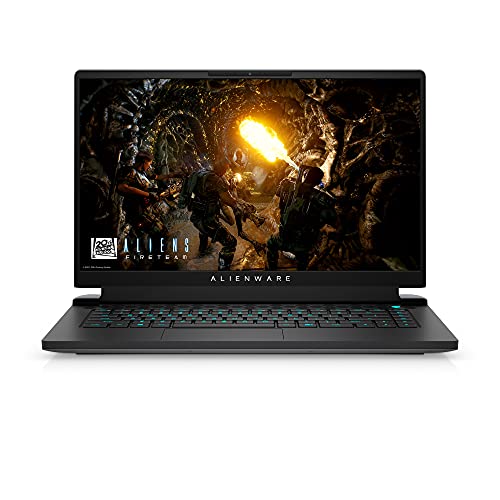
Alienware m15 R6, i7-11800H RTX review
Frame rates
1920×1080, High preset, upscaling off.
Measured on this machine. Source: Notebookcheck, 2021-11-29.
Not scored: incomplete benchmark suite
Every scored laptop on this site is averaged over the same 5 games, and this one is short of Cyberpunk 2077, Baldur's Gate 3. A mean over 4 games is not comparable to a mean over 5, so we publish the figures we have and leave the score blank rather than rank it against machines tested on a different set. The numbers below are real - the suite is just incomplete.
How these numbers were produced
Frame rates here are not measured by us, and we label how each one was arrived at. A figure marked measured comes from a published run on that exact machine. A figure marked representative is derived from the GPU and its power limit (TGP) and cross-referenced against published reviews - a sound estimate of what that configuration delivers, but not a measurement of that specific laptop. Unless stated otherwise, numbers are 1920x1080, High preset, upscaling off. Where a laptop ships in several power configurations we use the wattage of the exact SKU listed, because a 140W RTX 5070 and a 115W one are not the same product.
In use
The short version
The Alienware m15 R6 configuration here is a difficult machine to recommend at £3,214, not because its measured gaming performance is poor, but because the price demands more certainty and more complete evidence than the available data provides. Notebookcheck’s figures show that it is plainly fast at 1920x1080 with the High preset and upscaling disabled. It reaches 216fps in Strange Brigade, 166fps in GTA V, 149fps in The Witcher 3, 144fps in Dota 2, 119fps in Far Cry 5, 91fps in New World and 88fps in X-Plane 11. Those are capable results for a laptop with an RTX 3080 and Core i7-11800H.
There is a very important qualification, though. The m15 R6 has a 15.6in 1920x1080 IPS display with a 360Hz refresh rate. The measured figures show that the laptop can get very close to that refresh rate only in the lightest game in the supplied data, Strange Brigade. GTA V is also fast at 166fps, but it is still well short of 360fps. The Witcher 3 and Dota 2 sit around the mid-140fps region, while Far Cry 5, New World and X-Plane 11 are progressively further away from the screen’s maximum refresh rate.
That does not make the 360Hz panel useless. A game does not need to reach its display’s maximum refresh rate before it can benefit from a fast panel. But it does mean that this particular display specification is more ambitious than the demonstrated frame rates in most of the measured games. Buyers attracted specifically by 360Hz should be realistic about what these numbers say. This is not a laptop that has been shown to deliver 360fps across the supplied High-preset game set. It has been shown to deliver very high frame rates in selected lighter titles and strong, but much lower, results in more demanding ones.
The configuration also carries 32GB of memory, an 84Wh battery and a 2.529kg weight. The memory allocation is generous in the context of the supplied specification, while the battery capacity is a capacity figure rather than a measured runtime claim. There is no battery-life result in the fact sheet, so it would be wrong to promise a particular amount of unplugged use. Likewise, 2.529kg makes this a machine that can be transported, but it is not an especially casual carry for someone who expects to take it around all day.
The strongest reason to consider the m15 R6 is that Notebookcheck’s shared-game comparisons place it broadly level with two other RTX 3080 laptops: the Alienware x17 RTX 3080 and the Razer Blade Pro 17 2021 QHD Touch. Against the x17 it averages 1fps ahead across 4 shared games; against the Razer it averages 1fps behind across 4 shared games. Those are effectively tied results, not meaningful wins or losses. The fact that machines described with RTX 3080 graphics can sit so close together in this set is a reminder that a GPU name alone does not settle real gaming performance.
The strongest reason not to buy it is the asking price. At £3,214, buyers should not have to accept an incomplete scoring-suite record, an unconfirmed GPU power limit in the supplied specification, or a display refresh rate that the measured High-preset figures do not consistently approach. The scoring suite is incomplete because there is no figure for Final Fantasy XV. As every scored laptop is averaged across the same 5 games, this machine cannot honestly be ranked against fully scored laptops. That is not a criticism of the recorded frame rates; it is a limitation of the available benchmark coverage.
This Alienware is best understood as a powerful 1080p gaming laptop with a very fast display, rather than as a machine that demonstrably fills that display in every game. It makes the most sense for a buyer who values high frame rates in games such as Strange Brigade, GTA V, The Witcher 3 and Dota 2, is comfortable using a 2.529kg laptop mainly from a desk, and accepts that the available data does not establish a full comparable ranking. It is a weaker choice for someone who wants the clearest possible value case, a fully comparable benchmark score, confirmed GPU power information, or evidence that 360Hz is attainable in the demanding games they actually play.
Performance
What Notebookcheck’s numbers show
The available benchmark data was measured by Notebookcheck at 1920x1080, using the High preset with upscaling off. That is a useful basis for judging the m15 R6 because it matches the laptop’s native 1920x1080 display resolution and avoids treating an upscaling result as if it were a direct native-resolution result.
In the 4 available scoring-suite games, the m15 R6 records a mean of 154fps. The individual results are 216fps in Strange Brigade, 166fps in GTA V, 144fps in Dota 2 and 88fps in X-Plane 11. Even before considering the extra games outside the scoring suite, that range matters more than the mean on its own. A mean can make a configuration appear uniformly quick, but the actual results show that this laptop behaves very differently depending on the game.
Strange Brigade is the clear high point at 216fps. That is the result which comes closest to making the 360Hz display’s headline refresh rate feel relevant in the supplied figures. It is still not 360fps, but it is high enough to make the panel’s fast refresh rate more obviously useful than it is in the lower-performing results. GTA V follows at 166fps, a very fast outcome in its own right. The difference between 216fps and 166fps is substantial, however, and it underlines that even among games capable of producing high figures, the panel’s maximum remains demanding.
The Witcher 3 reaches 149fps and Dota 2 reaches 144fps. These are close enough to be considered part of the same broad performance band in the supplied data, even though they come from different games. They show the m15 R6 operating at frame rates that should suit players who prioritise responsiveness and smooth motion at 1080p, but they also show that 360Hz is not the expected outcome at the listed settings. A buyer choosing this machine for these games should think of the display as offering substantial headroom rather than as a target that the laptop has been demonstrated to reach.
Far Cry 5 comes in at 119fps. That is still comfortably above the conventional 60fps threshold often associated with basic smooth gaming, but it is much closer to the performance range represented by The Witcher 3 and Dota 2 than it is to Strange Brigade. New World records 91fps, and X-Plane 11 records 88fps. Those figures remain playable-looking results on paper, but they are a long way from the panel’s 360Hz ceiling. The fact that the same laptop spans from 216fps to 88fps at the same resolution, High preset and with upscaling off is the central performance story here.
There is no single “RTX 3080 performance” experience represented by this machine. There is a collection of game-specific outcomes. Anyone considering the m15 R6 should start with the titles closest to their own library, rather than taking the 154fps scoring-suite mean as a promise that every game will operate around that level. In these figures, Strange Brigade sits dramatically above X-Plane 11, while GTA V sits well above New World. That spread is not a flaw in the benchmark data; it is exactly why a review should present the individual results rather than relying only on a summary number.
The 360Hz screen is not the same thing as 360fps
The 360Hz refresh rate is one of the Alienware’s most prominent specifications, but it should be read alongside the benchmark table rather than separately from it. At 1920x1080 High with upscaling off, none of the supplied measured figures reaches 360fps. Strange Brigade at 216fps is the closest. GTA V at 166fps is substantially lower, while The Witcher 3 at 149fps, Dota 2 at 144fps, Far Cry 5 at 119fps, New World at 91fps and X-Plane 11 at 88fps sit progressively further from the display maximum.
The practical conclusion is not that the panel is wasted. It is that the headline refresh rate should not be mistaken for a demonstrated gaming result. A 360Hz screen can still display frame rates below 360fps, and the measured figures include several that are high enough to make a fast screen meaningful. What the data does not support is a claim that this laptop is routinely driving 360fps at its native resolution in the measured High-preset games.
For a player whose main priority is competitive play in a game with characteristics closer to Strange Brigade or GTA V, the 360Hz panel is easier to justify. For someone whose interests are closer to the supplied New World or X-Plane 11 results, the panel’s maximum refresh rate is less directly matched by the observed performance. The m15 R6 remains capable in those games according to the figures, but the argument for paying specifically for a 360Hz display becomes weaker when the game is operating at 91fps or 88fps.
This distinction is especially important at £3,214. Buyers should not only ask whether 360Hz sounds attractive. They should ask whether their games have been shown to produce frame rates that make the 360Hz specification meaningful. The available numbers say yes for some lighter titles in a qualified sense, but not across the entire measured selection. The display is a high-end feature; the benchmark evidence is more mixed than the refresh-rate figure alone suggests.
GPU power limit: what is known and what is not
The supplied fact sheet identifies the graphics processor as an RTX 3080, but it does not confirm the GPU power limit for this Alienware m15 R6 configuration. That absence matters because the rival data demonstrates that the same RTX 3080 label appears alongside different listed power limits. The Alienware x17 RTX 3080 is listed at 130W, while the Razer Blade Pro 17 2021 QHD Touch is listed at 100W. The MSI Prestige 15 has an RTX 3050 Ti listed at 105W, and the Schenker XMG Neo 15 E22 has an RTX 3080 Ti listed at 175W.
It would be tempting to infer a power limit for the m15 R6 from its name, its position in Alienware’s range, or its benchmark results. That would not be reliable and is not supported by the supplied specification. The correct position is simply that the m15 R6’s RTX 3080 power limit is unconfirmed here. Buyers comparing it with the 130W x17, the 100W Razer, or the 175W Schenker should not assume that an RTX 3080 designation means identical operating conditions.
The shared-game results make that point more clearly than a specification sheet could. The m15 R6 averages 1fps ahead of the Alienware x17 RTX 3080 across 4 shared games, despite the x17 being identified as a 130W RTX 3080 machine. It averages 1fps behind the Razer Blade Pro 17 2021 QHD Touch across 4 shared games, despite that Razer being identified as a 100W RTX 3080 machine. Those tiny differences are real results, but they are not evidence that the m15 R6 has a higher or lower power limit than either rival. They show only that the shared benchmark averages are effectively level.
The supplied comparison notes also explain why close results can happen: at 1080p, lighter titles in the shared set are CPU-bound and compress genuine GPU gaps. That is an important caution. Where the game is constrained by the processor rather than allowing the graphics processor to determine the result, differing GPU power limits may not create large differences in the frame-rate table. In other words, a close average does not prove that the GPUs are operating identically. It can show that the benchmark selection does not always expose the full difference between graphics configurations.
The Core i7-11800H is therefore part of the performance story, even though the supplied data does not include separate processor benchmarks. The combination of that CPU, the RTX 3080, 32GB of memory and the 1080p test resolution produces the listed results. It would be wrong to assign a precise share of each game’s frame rate to the CPU or GPU without further measurements. What can be said is that the provided comparison context explicitly warns that lighter 1080p games can become CPU-bound, and that helps explain why the m15 R6 can appear almost identical to RTX 3080 rivals with different stated power limits.
Comfortable performance versus headline performance
The word “comfortable” needs to be tied to the actual game rather than used as a blanket label. Strange Brigade at 216fps is the m15 R6 at its most convincing. That is a high figure, and it is the result most closely aligned with the machine’s 360Hz display. GTA V at 166fps is also strong. Neither reaches the screen’s stated maximum refresh rate, but both sit well above the lower results in the set.
The Witcher 3 at 149fps and Dota 2 at 144fps are also good outcomes for a 1080p laptop, particularly for buyers who value high frame rates rather than merely clearing a basic playability threshold. However, these numbers do not support buying the m15 R6 on the assumption that its screen will be fully fed at 360Hz in such games. The substantial gap between 144fps or 149fps and 360Hz is part of the product reality, not a minor technicality.
Far Cry 5 at 119fps is still a useful result for the panel, but it is no longer in the same very-high-frame-rate tier as 216fps or 166fps. New World at 91fps and X-Plane 11 at 88fps show that a premium RTX 3080 laptop can still encounter titles where the observed result is under 100fps at 1920x1080 High with upscaling off. That does not invalidate the laptop’s performance. It simply means buyers expecting a 360Hz machine to behave as a 360fps machine in every game will be disappointed.
The m15 R6 should therefore be bought for strong 1080p performance across a varied game set, not for a simplistic expectation of maximum-refresh gaming. Its numbers are better described as uneven but generally capable. The high end of the spread is excellent. The lower end remains credible, but it changes the meaning of the screen specification. A 360Hz IPS panel is most valuable when the game can generate enough frames to take advantage of it; the data shows that this happens to different degrees, not universally.
The incomplete scoring suite matters
The m15 R6 has measured results for Strange Brigade, GTA V, Dota 2 and X-Plane 11 from the scoring suite, giving the stated 154fps mean across those 4 games. However, there is no supplied result for Final Fantasy XV. Because every scored laptop is averaged over the same 5 games, this Alienware cannot be ranked honestly against machines with complete scoring-suite coverage.
This is not a reason to ignore the available results. The 154fps mean across the 4 measured scoring-suite games remains useful as a description of those 4 results. It is not a complete, directly comparable overall score. The missing Final Fantasy XV result could alter how the machine sits in a complete 5-game average, and the fact sheet does not provide the information needed to calculate that effect.
That missing figure is particularly relevant at this price. A £3,214 gaming laptop should be judged with a high standard of evidence. The benchmark data supports conclusions about the games that were measured. It supports shared-game comparisons with the listed rivals. It does not support a complete scored ranking. Buyers who need a clear league-table position should choose a laptop with complete data rather than treating a partial result as if it were final.
The screen
1920x1080 is a sensible match for the measured configuration
The m15 R6 uses a 15.6in IPS panel with a native 1920x1080 resolution and a 360Hz refresh rate. The benchmark figures were also recorded at 1920x1080, so there is no need to guess how the laptop performs at a different screen resolution. The numbers directly describe gaming at the panel’s native pixel count, using High settings and with upscaling off.
That alignment is valuable. The frame rates are not based on a reduced rendering resolution intended to inflate results, and they are not based on a higher resolution that the supplied internal display does not use. Strange Brigade at 216fps, GTA V at 166fps, The Witcher 3 at 149fps, Dota 2 at 144fps, Far Cry 5 at 119fps, New World at 91fps and X-Plane 11 at 88fps are all directly relevant to the 1920x1080 screen in this configuration.
The resolution also helps explain why the shared-game gaps against other RTX 3080 laptops are so small. The comparison notes state that lighter titles at 1080p can be CPU-bound, compressing genuine GPU gaps. That does not mean every measured game is CPU-bound. It means that this resolution and this style of game selection can reduce the visible separation between different graphics implementations. For the buyer, the useful takeaway is that a 1080p result should be read as a system result, not as a pure measure of the GPU label printed in the specification.
IPS and refresh rate are the confirmed display facts
The panel is specified as IPS. The fact sheet does not provide brightness, contrast, colour coverage, response-time measurements, backlight behaviour or any assessment of image quality. Those are all important considerations for a display, especially on a laptop priced at £3,214, but they are not available here. It would be wrong to describe the screen as bright, dim, colour-accurate, slow or fast beyond the stated 360Hz refresh rate.
The 360Hz specification does establish that this is a high-refresh display. It gives the m15 R6 considerable refresh-rate headroom above the benchmark figures. The machine’s best supplied result, 216fps in Strange Brigade, remains below 360Hz. The remaining figures fall further below. That means the screen is not shown to be a limiting ceiling in the supplied tests; the game performance is the limiting factor before the panel’s maximum is reached.
For buyers who mainly care about conventional 60fps gaming, the panel has far more refresh capability than the measured games require. For buyers who care about the highest possible frame rates, the situation is more nuanced. The laptop delivers 216fps and 166fps in the two fastest supplied results, which are clearly high frame rates. It also delivers 91fps and 88fps in two of the slower results. The display remains fast in all cases, but its 360Hz headline has very different practical significance at those different frame-rate levels.
This is why the panel should be seen as a feature with potential rather than a guaranteed outcome. It is a good fit for buyers who expect to prioritise titles capable of producing very high figures at 1920x1080. It is less compelling as a reason to pay extra if the intended games resemble New World or X-Plane 11 in the supplied data, where the benchmark results are much lower than the refresh ceiling.
Build, size and portability
The confirmed physical figure is a weight of 2.529kg. That places the m15 R6 firmly in the category of a laptop that can move between places, rather than a machine that disappears into a bag without being noticed. A buyer travelling occasionally between home, work, university accommodation or a gaming venue may find that manageable. A buyer who expects to carry the laptop throughout every day should take the 2.529kg figure seriously before focusing on the RTX 3080 badge or the 360Hz display.
The screen is 15.6in, which makes the Alienware a more contained proposition than the 17in class implied by the Alienware x17 RTX 3080 and the Razer Blade Pro 17 2021 QHD Touch names. However, the supplied fact sheet does not include the m15 R6’s dimensions, thickness, footprint or charger weight. It is therefore not possible to make a measured claim about how much space it occupies in a bag, how slim it is, or whether it is materially easier to carry than those rivals.
The 2.529kg figure is enough to establish the broad use case. This is best approached as a desk-first gaming laptop that remains transportable when required. Its performance figures are also most meaningful in that context. The 1920x1080 High-preset data shows strong gaming capability, while the physical weight suggests the machine is better suited to being moved deliberately than carried constantly.
The 84Wh battery is another specification that needs careful interpretation. Battery capacity is stated, but no battery-life measurement is supplied. There is no basis here for claiming a number of hours in gaming, video playback, web use or any other workload. Gaming laptops can behave very differently on battery compared with mains power, but the fact sheet does not provide unplugged frame rates or battery-mode performance. A buyer who needs long untethered use should not assume that 84Wh answers that question by itself.
Similarly, there are no supplied measurements for temperature, fan noise, keyboard quality, port selection, storage capacity, webcam quality, chassis rigidity or serviceability. These omissions are worth stating because they matter in a real purchase decision. A laptop can post strong frame rates and still be unsuitable for a particular buyer because of acoustic behaviour, connectivity or ergonomics. There is simply no evidence in this fact sheet to make a responsible claim either way about those areas.
The 32GB memory configuration is a confirmed positive in the specification. It gives this m15 R6 a substantial memory allocation alongside the Core i7-11800H and RTX 3080. The data does not show how that memory affects individual frame rates, and it would be wrong to attribute the 216fps Strange Brigade result or the 88fps X-Plane 11 result to memory capacity alone. But buyers do at least know that this configuration is not being presented with a minimal memory allocation.
Overall, portability is a compromise rather than a selling point. The m15 R6 is not immobile; 2.529kg is still a laptop weight, not a desktop system. But the evidence supports treating it as a machine to transport when necessary, not one chosen primarily for light daily carry. If your priority is a powerful 15.6in gaming system used mostly in one place, that compromise may be acceptable. If low carrying weight, confirmed battery longevity or a compact chassis is a priority, the supplied data does not make a strong case for this Alienware.
How it compares
Against the MSI Prestige 15 RTX 3050 Ti
The m15 R6’s clearest measured advantage is over the MSI Prestige 15 with an RTX 3050 Ti at 105W. Across 3 shared games, the Alienware averages 69fps ahead. That is a meaningful gap, and it is the largest advantage listed for the m15 R6 among these rivals.
The comparison should still be interpreted carefully. The MSI’s UK price is not confirmed in the supplied data, so this cannot become a complete value comparison. It would be wrong to say whether the Alienware’s £3,214 price premium is justified without knowing what the MSI costs in the UK. The GPUs are also not equivalent: the MSI is identified as an RTX 3050 Ti at 105W, while the Alienware is identified as an RTX 3080 with no confirmed power limit in the fact sheet.
What the shared-game result does establish is that the m15 R6 is substantially quicker in the common benchmark sample. A 69fps average lead across 3 shared games is large enough that it should not be dismissed as benchmark noise or a trivial difference. For a buyer choosing on gaming speed alone, this is the comparison in which the Alienware’s RTX 3080 configuration has the clearest advantage.
However, this does not automatically make the m15 R6 good value. Performance leadership over an RTX 3050 Ti machine is expected from a configuration positioned around an RTX 3080, but a £3,214 asking price still needs to be considered against the buyer’s budget and needs. The m15 R6 is the better fit for someone who wants substantially higher shared-game frame rates. The MSI may still matter to buyers for whom price, weight, screen characteristics or other unavailable factors take priority, but the supplied data does not allow those aspects to be compared.
Against the Alienware x17 RTX 3080
The Alienware x17 RTX 3080 is the closest performance comparison in the provided set. It has an RTX 3080 listed at 130W, yet the m15 R6 averages only 1fps ahead across 4 shared games. That should be read as a tie in practical terms, not as a meaningful victory for the m15 R6.
The small difference is useful precisely because it warns against reading too much into either machine’s branding. Both are Alienware models with RTX 3080 graphics, but the x17 has a stated 130W GPU power limit while the m15 R6’s power limit is not confirmed. The shared benchmark average does not reveal a useful gap between them. The supplied context explains one plausible reason: at 1080p, lighter titles can be CPU-bound and compress genuine GPU differences.
This is especially relevant because the m15 R6’s measured tests are at 1920x1080. If the shared games include lighter titles that are limited elsewhere in the system, the 130W description on the x17 may not translate into a clear advantage in these particular average figures. That does not mean the power limit is irrelevant. It means the supplied shared-game result is not exposing a decisive separation.
The x17 has no confirmed UK price in the fact sheet. As a result, a buyer cannot use this review to determine whether the m15 R6 is the better purchase financially. The performance evidence says they are effectively level across 4 shared games. The physical naming suggests different screen-size classes, but the x17’s specific size, weight and display specification are not provided here, so no detailed portability or screen comparison can be made responsibly.
If you are choosing between these two based only on the provided game data, do not pay a meaningful premium for a 1fps claimed advantage. There is no meaningful advantage in that number. The decision should instead depend on confirmed price and the missing practical specifications that matter to you. For the m15 R6, the relevant known facts are its 15.6in 1920x1080 360Hz IPS panel, 2.529kg weight, 84Wh battery and £3,214 UK price. For the x17, the supplied comparison does not provide equivalent UK price information.
Against the Razer Blade Pro 17 2021 QHD Touch
The Razer Blade Pro 17 2021 QHD Touch is another near-tie, with the m15 R6 averaging 1fps behind across 4 shared games. Again, this should not be treated as a material defeat. A 1fps difference across the supplied shared-game sample is effectively level performance for buying purposes.
The Razer is listed with an RTX 3080 at 100W and a UK price of £4,500. The Alienware is listed at £3,214, with an RTX 3080 whose power limit is not confirmed in the fact sheet. The price difference is substantial in cash terms, but it would be inappropriate to calculate or state a derived numerical difference here. The important point is simpler: the Razer costs considerably more according to the supplied UK prices, while the shared-game average is effectively unchanged.
That makes the Razer difficult to justify on shared-game performance alone. If the two machines are separated by only 1fps across 4 shared games, then the Razer’s £4,500 price cannot be defended by those frame rates. It may have other attributes that matter to particular buyers, including the QHD Touch description in its name, but the supplied fact sheet does not provide its detailed display measurements, weight, battery capacity or dimensions. Those unknowns cannot be turned into assumed advantages.
For the m15 R6, this is one of the more favourable comparisons. The Alienware’s £3,214 price is still high, and the lack of a complete scoring-suite record remains a limitation. But against a £4,500 RTX 3080 rival with effectively identical shared-game performance, the m15 R6 at least avoids looking uniquely expensive. It offers a 15.6in 1920x1080 360Hz IPS display rather than a QHD Touch panel, so the two laptops are not aimed at exactly the same screen preference. Nevertheless, the benchmark data gives no reason to expect the pricier Razer to deliver a meaningful shared-game frame-rate advantage.
This is also a useful reminder that the m15 R6’s 1080p screen matters to its performance proposition. The Razer’s name identifies it as QHD Touch, while the Alienware uses 1920x1080. The supplied shared-game comparison is already adjusted to games both hold, but buyers should still avoid assuming that a laptop with a different screen resolution has an identical overall usage profile. The m15 R6 is explicitly built around 1080p and 360Hz; its measured figures are directly at that resolution.
Against the Schenker XMG Neo 15 E22 RTX 3080 Ti
The Schenker XMG Neo 15 E22, identified as an early 2022 model with an RTX 3080 Ti at 175W, is the strongest listed rival in the shared-game data. The m15 R6 averages 26fps behind across 4 shared games. That is a meaningful deficit, unlike the 1fps gaps against the Alienware x17 and Razer Blade Pro 17.
This comparison shows the limit of treating all high-end gaming laptops as interchangeable. The Schenker is identified with an RTX 3080 Ti at 175W, while the Alienware uses an RTX 3080 with no confirmed power limit in the supplied specification. The m15 R6 is not catastrophically behind in the data, but a 26fps average deficit across 4 shared games is large enough to matter to someone buying around the upper end of the gaming-laptop market.
The Schenker has no confirmed UK price in the fact sheet, so there is no responsible value verdict between the two. If the Schenker were unavailable, much more expensive or otherwise unsuitable, the Alienware’s results would still be capable. If the Schenker were available at a competitive UK price, the 26fps shared-game advantage would make it a serious alternative for performance-focused buyers. The missing price is not a minor detail; it prevents the most important conclusion for many shoppers.
The 175W figure also reinforces why the m15 R6’s unconfirmed GPU power limit is frustrating. It is not possible to say whether the gap is due to the RTX 3080 Ti designation, the stated 175W power limit, other system differences, or a combination of factors. The shared-game results show the outcome, not a complete technical explanation. The safe conclusion is that the Schenker is quicker by a meaningful 26fps average in the 4 games both machines hold.
For a buyer whose priority is extracting the highest available shared-game performance, the Schenker is the better-performing option in this group. For someone who prefers the Alienware’s 15.6in 1920x1080 360Hz IPS configuration, the m15 R6 remains a valid preference, but it should not be bought under the assumption that it leads every high-end rival. The supplied data says the opposite in this comparison.
Who it’s for
Buy it if your priorities match the evidence
The Alienware m15 R6 is for the buyer who wants a high-spec 15.6in 1080p gaming laptop and is prepared to use it principally as a desk-based machine. Its 2.529kg weight makes occasional transport plausible, but it is not the defining advantage of this configuration. The important attractions are the RTX 3080, Core i7-11800H, 32GB of memory, 1920x1080 IPS screen and 360Hz refresh rate.
It is most convincing for someone whose games resemble the faster end of the supplied benchmark set. Strange Brigade at 216fps and GTA V at 166fps demonstrate that the m15 R6 can deliver very high frame rates at native resolution using the High preset with upscaling off. The Witcher 3 at 149fps and Dota 2 at 144fps remain strong results for players who want more than merely basic smoothness. Those are the use cases where the 360Hz display has the clearest rationale, even if the supplied figures do not show the panel being fully saturated.
It also suits a buyer who values a 1080p high-refresh approach more than a higher-resolution approach. The measured results are at the display’s native 1920x1080 resolution, so the performance proposition is direct and uncomplicated. You are not being asked to assume how the machine behaves at its own panel resolution; the listed figures already answer that for the measured games.
The m15 R6 may also appeal to someone comparing it with the £4,500 Razer Blade Pro 17 2021 QHD Touch and caring primarily about the shared game data. The Alienware is effectively level with that Razer across 4 shared games, only 1fps behind on average, while carrying a much lower stated UK price. That does not establish that the Alienware is universally superior, because the fact sheet does not provide a complete practical comparison. It does establish that the Razer’s much higher price is not reflected in a meaningful shared-game frame-rate lead.
Buy something else if value certainty matters most
Buy something else if you need a complete scored ranking before spending £3,214. The m15 R6 has no figure for Final Fantasy XV, so its scoring suite is incomplete. The available 154fps mean covers 4 scoring-suite games only. Because every scored laptop is averaged across the same 5 games, this laptop cannot be placed honestly against fully scored machines. If you want the clearest possible answer to “where does it rank?”, this is not enough data.
Buy something else if you are paying specifically for 360Hz and expect 360fps in demanding games. The supplied figures do not show that. The best result is 216fps in Strange Brigade. GTA V reaches 166fps, The Witcher 3 149fps, Dota 2 144fps, Far Cry 5 119fps, New World 91fps and X-Plane 11 88fps. The display is extremely fast, but the measured games do not routinely come close to its maximum refresh rate.
Buy something else if you require confirmed information about the RTX 3080’s power limit. The fact sheet does not provide it for this m15 R6. That does not make the laptop slow; its measured figures are the relevant evidence of what it achieved in the listed games. But buyers comparing technical configurations may reasonably want to know how this GPU is configured, particularly when the rival list includes RTX 3080 systems at 130W and 100W, plus an RTX 3080 Ti at 175W.
Buy something else if you need a lighter daily-carry machine. At 2.529kg, the m15 R6 is transportable but not lightweight. There are no dimensions or charger-weight figures supplied, so it is not possible to make a full portability calculation. The available weight alone is enough to say that buyers who carry a laptop for long periods should look carefully at lighter alternatives.
Buy something else if you need confirmed battery-life, noise, thermal, display-quality or connectivity measurements. The 84Wh battery tells you capacity, not runtime. There are no supplied figures for temperatures or fan noise. There are no measurements for screen brightness, colour, contrast or response behaviour beyond the panel being IPS and 360Hz. There are no details on ports or storage. At £3,214, those missing details may matter as much as the frame-rate table.
The final buying view
The Alienware m15 R6 is a capable 1920x1080 gaming laptop whose RTX 3080 and Core i7-11800H produce high frame rates in Notebookcheck’s measured data. It is particularly strong in Strange Brigade at 216fps and GTA V at 166fps, solid around the mid-140fps range in The Witcher 3 and Dota 2, and still capable but far less aligned with its 360Hz display in Far Cry 5, New World and X-Plane 11.
Its benchmark position among the listed rivals is mixed in a useful way. It decisively leads the MSI Prestige 15 RTX 3050 Ti by 69fps across 3 shared games. It is effectively tied with the Alienware x17 RTX 3080 and Razer Blade Pro 17 2021 QHD Touch, differing by only 1fps across 4 shared games in each comparison. It trails the Schenker XMG Neo 15 E22 RTX 3080 Ti by 26fps across 4 shared games. That is a credible high-end performance profile, but not an unquestionable class-leading one.
At £3,214, the m15 R6 needs a buyer whose preferences line up closely with what is known. Choose it for strong native-1080p performance, 32GB of memory and a 360Hz IPS display, while accepting that the refresh rate is not fully realised in the supplied High-preset results. Do not choose it because you assume every RTX 3080 laptop behaves alike, because you expect 360fps across modern demanding games, or because you need a complete benchmark ranking. The evidence supports confidence in the measured frame rates; it does not support confidence beyond them.